
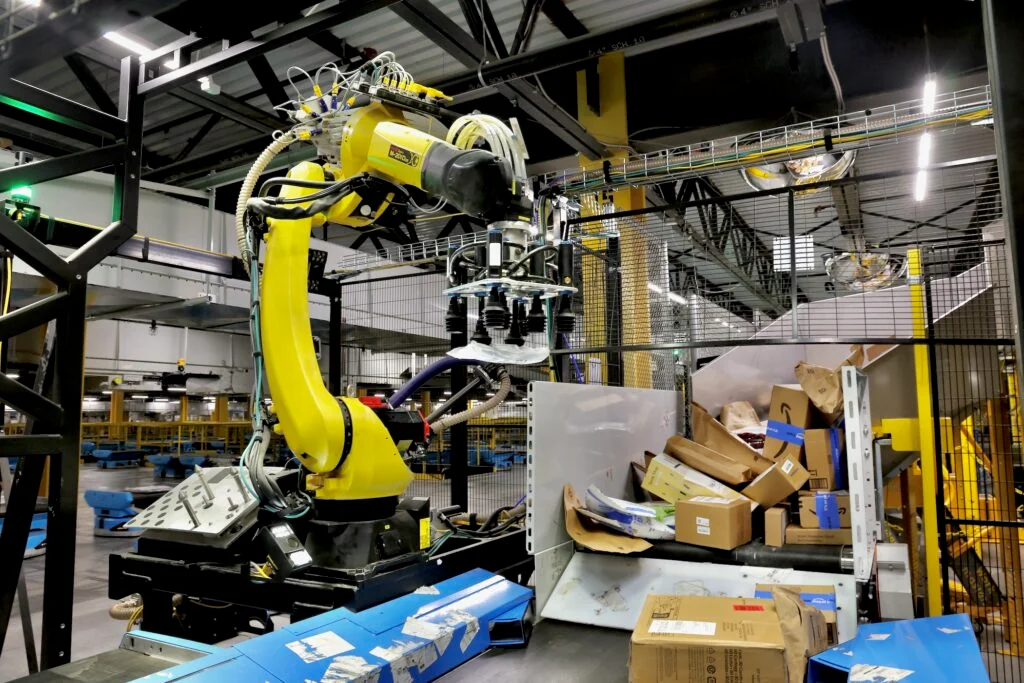
Amazon, the global e-commerce and technology giant, has reportedly issued early warnings indicating plans to replace a significant portion of its workforce with artificial intelligence systems. This announcement reflects the company’s long-term strategy to integrate AI-driven automation into operations, from logistics and warehousing to customer service and administrative tasks.
Industry experts suggest that the move is part of Amazon’s broader effort to reduce operational costs, increase efficiency, and maintain competitiveness in a rapidly evolving global market. By automating routine and repetitive tasks, Amazon can streamline processes while reallocating human resources to higher-level strategic roles.
How AI Will Transform Amazon’s Workforce
The planned integration of AI across Amazon’s operations encompasses a wide range of technologies, including robotic fulfillment systems, machine learning-powered inventory management, and AI chatbots for customer service. Advanced algorithms can optimize delivery routes, predict product demand, and identify potential issues in real-time, significantly reducing human intervention.
While AI will handle repetitive and data-driven tasks, human employees are expected to focus on oversight, problem-solving, and creative tasks that require judgment, empathy, and strategic thinking. Amazon emphasizes that automation is intended to augment, rather than fully eliminate, the role of humans in the workplace.
However, analysts warn that the scale of automation could lead to substantial workforce reductions, particularly in roles that are highly routine or easily replicable by machines. This raises important questions about job security, worker retraining, and the ethical implementation of AI in large-scale operations.
Implications for the E-Commerce and Logistics Industry
Amazon’s approach could set a precedent for other e-commerce and logistics companies around the world. The adoption of AI for large-scale workforce management demonstrates how automation can reshape entire industries, potentially redefining the balance between human labor and technology.
The integration of AI promises several benefits, including faster fulfillment, higher accuracy in inventory and shipment tracking, and improved customer experiences through real-time support. Companies that follow Amazon’s lead may find themselves compelled to invest in automation technologies to remain competitive in the global market.
At the same time, there is growing concern about the social impact of replacing human workers with AI. Policymakers, labor unions, and corporate leaders will need to consider strategies for workforce transition, reskilling programs, and regulations to ensure that technological advancement does not come at the expense of employment opportunities.
Preparing for an AI-Driven Future
Amazon’s early warning has sparked discussions about the broader consequences of AI-driven automation in the workplace. Organizations across sectors are being urged to evaluate which tasks can be automated, how employees can be retrained, and how AI can complement human skills rather than replace them entirely.
Experts suggest that a hybrid workforce model, where AI handles repetitive tasks and humans oversee, guide, and innovate, may become the standard. Companies that embrace this balance are more likely to achieve sustainable growth while mitigating potential social disruptions.
The Amazon case serves as a reminder of the rapid pace of AI adoption in global business. As technology continues to advance, businesses, governments, and workers must collaborate to navigate the transition responsibly, ensuring that AI enhances productivity while maintaining economic stability and job opportunities.
The announcement highlights a crucial turning point in corporate automation strategy. While AI promises significant operational advantages, its implementation will require careful planning, ethical consideration, and investment in human capital to create a future where technology and workforce coexist harmoniously.
Source: https://malaka555.sg-host.com/
0 Comments